Hello 2026 - Top hospitality technology trends to watch out for this year.
In 2026, hospitality technology is no longer about experimentation or digital transformation for its own sake. The industry has entered a more mature phase, where technology is expected to deliver measurable value, operate seamlessly in the background, and enhance human connection rather than replace it. Guests are more digitally fluent, operators are under greater cost pressure, and brands are being held to higher standards of personalisation, sustainability, and trust. Against this backdrop, the technology trends shaping hospitality in 2026 reflect a clear shift toward intelligence, integration, and intentional design.
Agentic artificial intelligence and decision-led systems
Artificial intelligence has evolved far beyond chatbots and basic automation. In 2026, hospitality is seeing the rise of agentic AI systems that are capable of making decisions, not just recommendations. These systems analyse real-time data across revenue management, operations, guest behaviour, and staffing, then act autonomously within defined parameters.
Revenue management platforms are dynamically adjusting pricing based on live demand signals, while operational AI tools are forecasting staffing needs and optimising labour deployment. Guest-facing intelligence is becoming more contextual and adaptive, allowing hotels to tailor experiences in real time rather than relying on static profiles. Importantly, this generation of AI is increasingly positioned as a support layer for staff, surfacing insights that enable more thoughtful, personalised service. The focus in 2026 is not on replacing people, but on empowering them.
Fully connected guest journeys through integrated platforms
The move toward fully connected guest journeys is being driven as much by sustainability as by convenience. Hotels are increasingly reducing paper-heavy in-room materials such as printed compendiums, directories, menus, and promotional leaflets, replacing them with integrated digital platforms that centralise guest information.
Guest apps are becoming the primary channel for this shift, giving guests easy access to arrival details, room information, dining menus, spa services, sustainability initiatives, and local recommendations. Because these platforms connect directly to core systems like PMS and CRM, content can be updated in real time, reducing waste while ensuring information remains accurate and relevant.
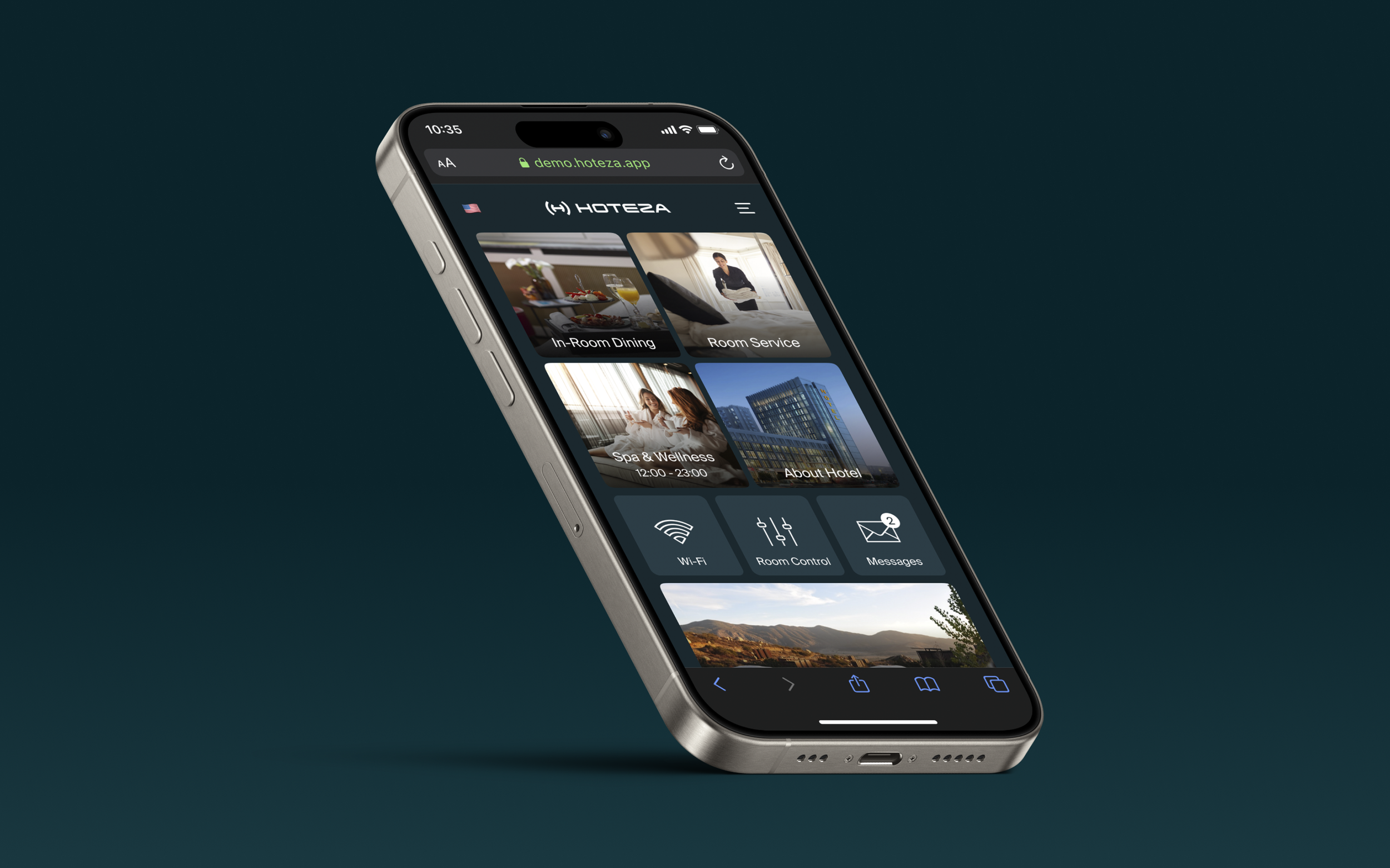
Hoteza Guest App
This approach lowers the operational costs associated with printing and replacement, while creating a cleaner, more considered in-room environment. Fully connected guest journeys allow hotels to communicate more effectively while physically placing less in the room.
Hotel TV systems as the new in-room experience hub
Hotel TV systems are playing a key role in the transition toward paperless guest rooms. The in-room television has evolved into a central experience hub, replacing printed folders and desk cards with intuitive digital content.
Through modern TV platforms, hotels can display welcome messages, hotel information, dining and room service menus, sustainability messaging, and local area guides in a dynamic format. Content can be updated instantly, ensuring guests always have access to the latest information without generating waste.
By removing printed materials from bedrooms, hotels can significantly reduce paper use while also improving operational efficiency. When paired with guest apps, hotel TV systems support a more sustainable, uncluttered, and engaging in-room experience, reinforcing both service quality and brand values.
Frictionless but flexible contactless experiences
Contactless technology has become an expected baseline rather than a differentiator. By 2026, the conversation has moved beyond removing touchpoints to giving guests choice and control over how they interact. Mobile check-in, digital keys, app-based requests, and contactless payments are standard, but the most successful hotels are designing these experiences to coexist with high-touch service.
Technology is being used to eliminate unnecessary waiting and administrative friction, allowing staff to focus on moments where human interaction adds real value. This balance is critical. Guests want efficiency when it suits them and personal service when it matters. In 2026, contactless technology succeeds when it feels invisible and optional rather than imposed.
Sustainability technology and resource intelligence
Sustainability is no longer driven by messaging alone. In 2026, hospitality brands are relying on advanced technology to actively manage and reduce their environmental impact. Smart energy systems, water monitoring tools, and AI-driven resource forecasting are being embedded into daily operations, allowing hotels to respond dynamically to usage patterns and minimise waste.
What sets 2026 apart is the growing demand for transparency. Technology is enabling hotels to measure and report their sustainability performance with greater accuracy, supporting both regulatory requirements and guest expectations. Sustainability technology is becoming a core operational function rather than a side initiative, directly linked to cost control, brand trust, and long-term resilience.
Data privacy, cybersecurity, and digital trust
As personalisation becomes more sophisticated, data privacy and trust have emerged as critical technology priorities. Guests are increasingly aware of how their data is collected and used, and their willingness to share information depends on confidence and transparency.
In 2026, hospitality brands are investing more heavily in secure data architectures, consent-driven personalisation frameworks, and advanced cybersecurity measures. Technologies such as blockchain-enabled identity verification and secure payment systems are gaining traction, particularly in international and high-value travel contexts. Trust is no longer assumed; it must be actively designed into every digital interaction.
Immersive and contextual digital experiences
Immersive technologies such as augmented and virtual reality are becoming more focused and purposeful. Rather than novelty features, these tools are being applied to help guests make decisions and engage more deeply with destinations and experiences.
Hotels are using immersive technology to showcase rooms, event spaces, and experiences before booking, while on-property applications are enhancing storytelling, wayfinding, and cultural context. In 2026, immersion is about clarity and enrichment rather than spectacle, supporting more confident choices and deeper emotional connection.
Intelligent operations and predictive infrastructure
Behind the scenes, hospitality technology is quietly reshaping operations. Predictive maintenance systems powered by IoT and AI are reducing equipment downtime and extending asset life. Smart inventory and procurement platforms are improving supply chain visibility and resilience at a time of ongoing global volatility.
These technologies may be invisible to guests, but they are critical to delivering consistent quality and controlling costs. In 2026, operational intelligence is a key enabler of guest satisfaction, profitability, and scalability.
Looking ahead
The defining hospitality technology trend of 2026 is intentionality. The industry is moving away from adopting technology because it is available and toward deploying solutions that clearly support brand identity, guest experience, and operational strategy. Technology is expected to be intelligent, integrated, and human-centric.
Hotels that succeed in 2026 will be those that treat technology not as a collection of tools, but as a foundation for meaningful, connected experiences. By aligning innovation with empathy, sustainability, and trust, hospitality brands can create environments that feel both technologically advanced and deeply personal.
Want to know more about our solution?
Speak with our team today about your technology pain points and get to know our solutions. Contact us at hello@siemlus.com