Hospitality Tech 360: The rise of the tech GM: A leadership reset hospitality can’t ignore.
At Hospitality Tech 360 in London, a clear message emerged from the Leaders Forum session, “The Rise of the Tech GM: Are Hoteliers Ready for a Leadership Reset?”: the industry is approaching a pivotal transformation. Technology is no longer a supporting function in hospitality. It is steadily becoming central to how hotels operate, compete, and define guest experience.
Moderated by Jane Pendlebury, CEO of HOSPA, the session brought together Gavin Allison, Mahesh Nair, and Neil Braude to explore the evolving role of technology in hospitality leadership. Their combined perspectives, spanning technology, operations, and executive search, highlighted how the profile of hotel leadership is shifting.
Gavin Allison, now leading technology at Lore Group, reflected on a career that has moved from hands-on technical roles into senior IT leadership across global brands such as Four Seasons Hotels and Resorts and Mandarin Oriental Hotel Group, illustrating how deeply technology is now embedded in hotel operations. Neil Braude, COO of Imperial London Hotels, shared a contrasting path, having transitioned from food and beverage into revenue management and wider operations, reinforcing the importance of commercial expertise in modern leadership. Mahesh Nair, representing Hofstra Exec Search, offered a broader industry view, noting a gradual but clear shift in demand towards leaders who can combine operational strength with technological understanding.
Together, the discussion painted a picture of an industry in transition, where leadership expectations, operational priorities, and performance metrics are all being reshaped by digital capability.
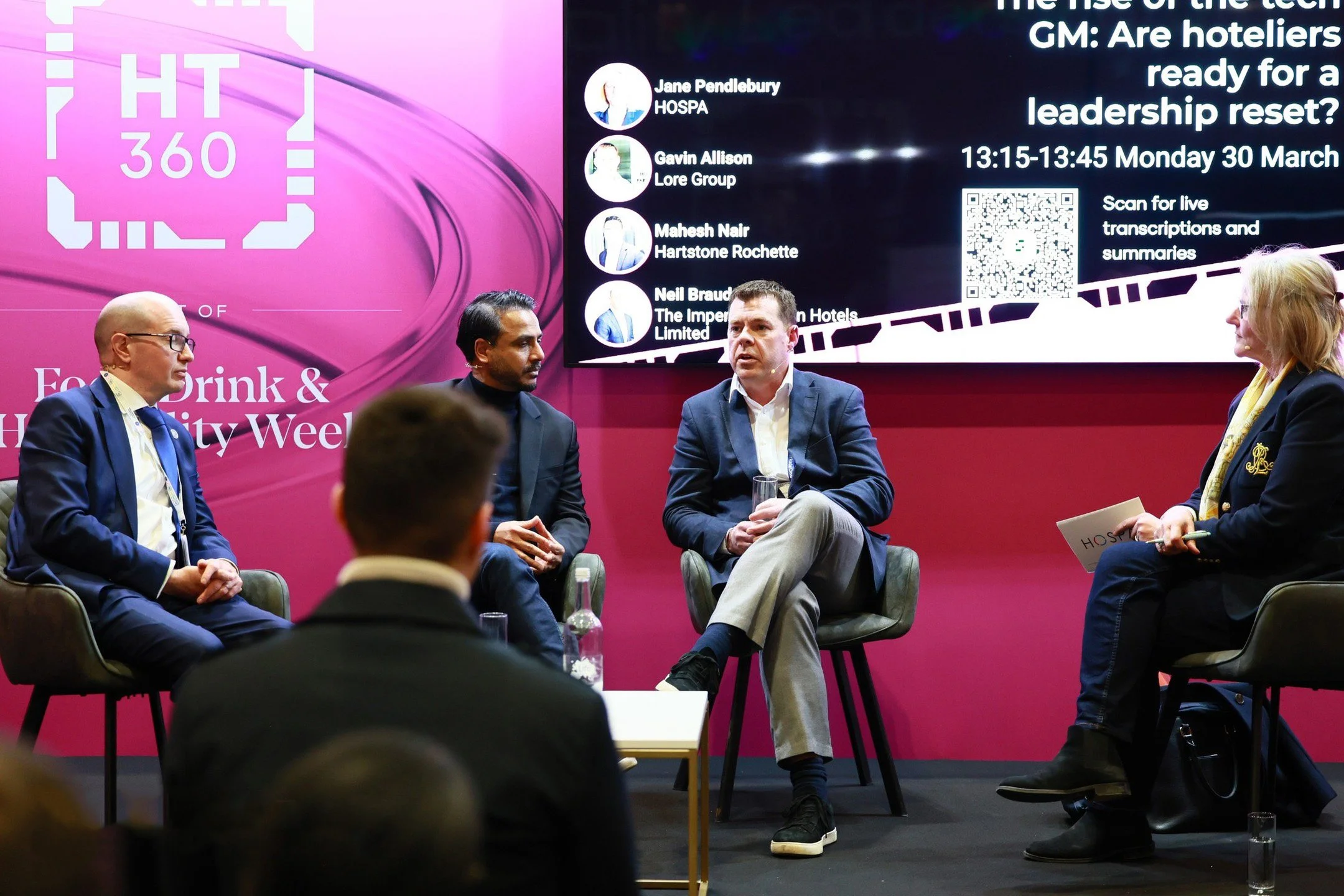
Neil Braude, Mahesh Nair, Gavin Allison & Jane Pendlebury
Lifestyle hotels will see tech GMs first
The emergence of technology-led general managers is expected to begin in lifestyle and limited-service hotel environments. These models, often built around speed, convenience, and digitally fluent guests, naturally lend themselves to leaders who understand systems, data, and automation as core business tools.
Luxury hospitality, by contrast, remains more resistant. Its emphasis on tradition, service rituals, and established operational hierarchies means the transition toward tech-led leadership will likely be slower. However, as guest expectations increasingly centre around seamless connectivity, digital convenience, and frictionless service, even the most traditional segments will face growing pressure to evolve.
Personalisation is the invaluable tech investment
Personalisation has moved from a differentiator to a baseline expectation. The ability to tailor experiences, from booking through to post-stay engagement, is now seen as one of the most valuable applications of technology in hospitality.
"Personalisation is the one thing that we can't live without anymore."
By leveraging booking data, guest preferences, and behavioural insights, hotels can create journeys that feel intuitive and relevant. Whether identifying a family travelling with children or anticipating a guest’s service preferences, these touch points are increasingly what define quality. This extends beyond pre-arrival communication into the in-stay experience itself, where connected & personalised in-room Hotel TV systems, guest Wi-Fi environments, and digital interfaces can dynamically adapt content, messaging, and offers in real time.
Without this level of integration across guest-facing platforms, personalisation remains limited and so too does the opportunity to drive engagement, loyalty, and incremental revenue.
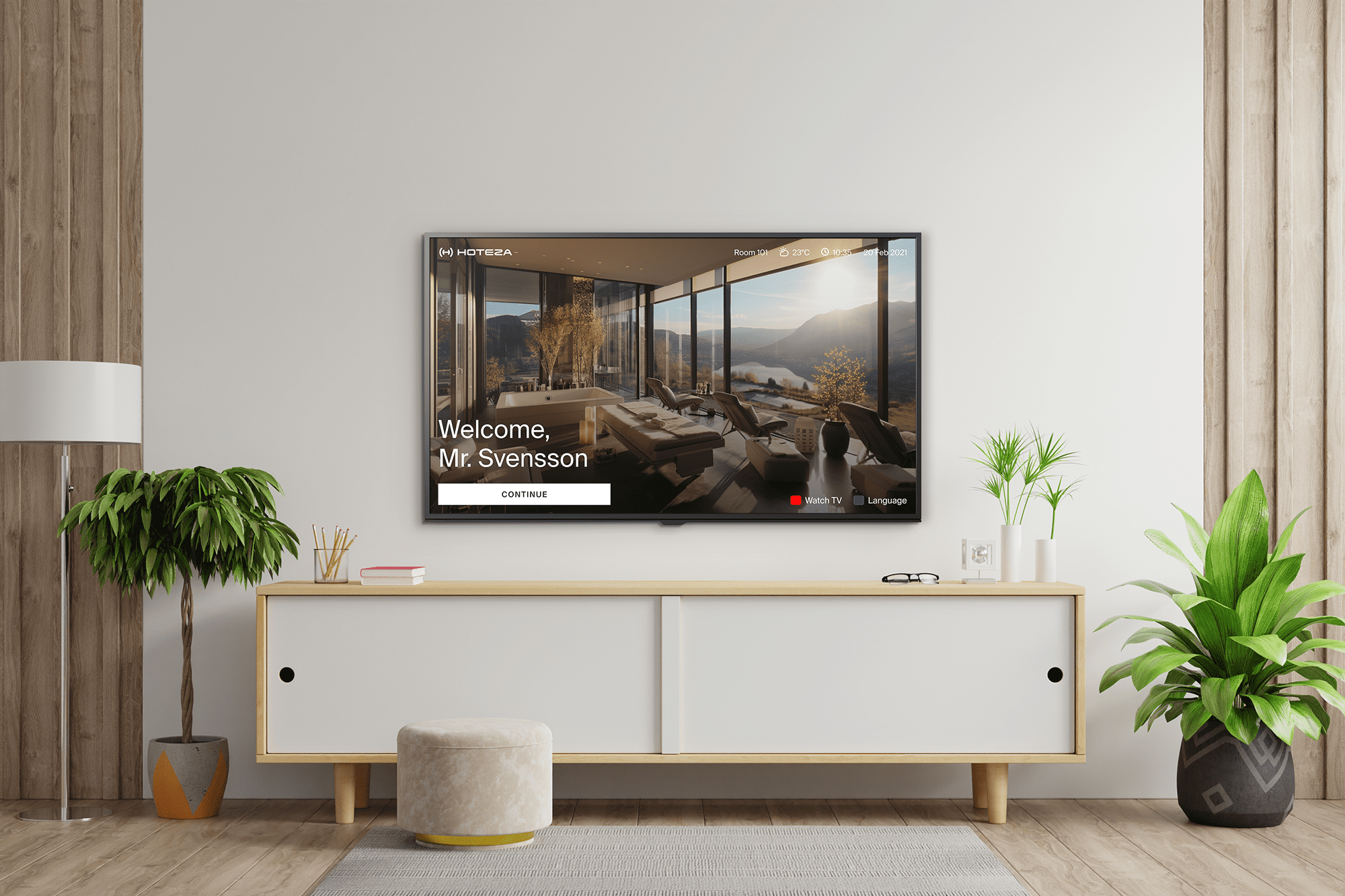
Hoteza Hotel TV System Personalisation
Tech leaders lack revenue and F&B 'Dark Arts'
While technology leaders are gaining influence, notable gaps remain. Revenue management and food and beverage operations were described as “dark arts”, disciplines that require deep, specialised expertise and experience.
This highlights a broader challenge. Future leaders must bridge domains. Pure technical expertise is not enough, just as traditional operational experience alone is becoming insufficient. The next generation of leaders will need to integrate both, understanding not only how systems work, but how they directly influence commercial performance and the guest experience.
People and process before technology
Despite the growing emphasis on digital tools, the panel reinforced a fundamental truth. Technology alone does not drive transformation.
Successful implementation follows a clear hierarchy. People come first, then process, and finally technology. Changing behaviours, aligning teams, and redefining workflows are the hardest and most critical steps. Only once these are in place can technology deliver meaningful impact, ensuring that systems are not just installed, but fully adopted and embedded into daily operations.
Tech must shift from enabler to core business function
Perhaps the most important shift discussed was conceptual. For many hotels, technology is still viewed as an enabler, a back of house function that supports operations. This mindset is increasingly outdated.
"This shift in mindset is essential because hotels lose business to OTAs precisely because they don't invest enough in technology."
Online travel agencies have demonstrated what happens when technology is treated as the business itself. Their dominance in distribution is not accidental. It is the result of sustained investment in digital capability, data, and user experience. For hotels to compete effectively, technology must move into the centre of decision making, shaping strategy rather than simply supporting it. This includes investing in the underlying infrastructure that enables performance, from reliable connectivity and secure networks to platforms that support direct engagement with guests across multiple touch points.
Unifying Technology, Commercial, and Digital
Forward thinking organisations are already restructuring around this principle. Integrating technology with commercial and digital functions enables more cohesive decision making, powered by data rather than silos.
When these elements are aligned, the guest journey becomes far more cohesive, from initial discovery and booking through to arrival, in room experience, and post stay interaction. Each touchpoint is connected, informed, and consistent, supported by systems that allow data to flow seamlessly across the business rather than sitting in isolated platforms.
Fix Data Before Racing to AI
While artificial intelligence dominates industry conversation, the panel struck a cautious tone. The reality is that many hotels still struggle with fragmented, inconsistent data across systems.
Without clean, unified data, AI cannot deliver meaningful value. Implementing multiple disconnected solutions only compounds the problem. Establishing this foundation requires more than new tools. It depends on well managed IT environments, secure infrastructure, and a clear approach to how data is collected, stored, and used across the organisation.
The priority is not to win an AI race, but to create a single, reliable source of truth that can support more advanced capabilities over time.
T-Shaped Experience: The Future GM Profile
The profile of future general managers is also evolving. Traditional career paths, often built within a single property or brand, are giving way to more diverse, cross functional experience.
The standout candidates will be “T-shaped”, individuals with deep operational expertise combined with a broad understanding of technology, data, and how different functions interconnect to enhance the guest experience.
Future GM Compensation Will Include Digital KPIs
As leadership roles evolve, so too will the metrics used to evaluate them. Financial performance will remain important, but digital indicators are set to play a much larger role.
Metrics such as direct booking conversion, channel performance, and guest experience scores driven by data insights are likely to become key components of GM evaluation and compensation. These metrics are directly influenced by the effectiveness of a hotel’s digital ecosystem, from how guests interact with online channels to how they experience connectivity and services during their stay.
Operators Have Never Considered Tech Staff for GM Paths
One of the more subtle but significant barriers identified is cultural. Technology professionals have historically been excluded from leadership pathways, not due to lack of capability, but simply because they have not been considered.
Bringing technology leaders into commercial discussions, leadership meetings, and strategic planning processes could fundamentally change how hotels operate. It is not just about new skills. It is about new perspectives that recognise technology as integral to both operational success and guest satisfaction.
Conclusion
The rise of the Tech GM is not just about a new job title. It represents a broader shift in how hospitality defines leadership, values expertise, and competes in a digital first world.
Technology is no longer optional, nor is it secondary. It underpins everything from guest connectivity and in room experience to data security and commercial performance. Hotels that recognise this and invest accordingly will be better positioned to meet evolving expectations, unlock new revenue opportunities, and remain competitive in an increasingly digital landscape.
Those that do not risk falling further behind in an industry that is rapidly redefining itself.
Interested in how Hospitality Technology can transform your hotel?
Most hoteliers hold back on technology not because it lacks value, but because the path forward is unclear or the investment feels difficult to justify.
Taking the time to understand where the real challenges sit, whether across guest experience, connectivity, data, or operational efficiency, is often the first step. From there, the right solutions can be introduced in a way that aligns with both modern traveller expectations and the realities of budget and scale.
Email us: hello@siemlus.com
Or give our team a call: +44(0)330 016 1920